
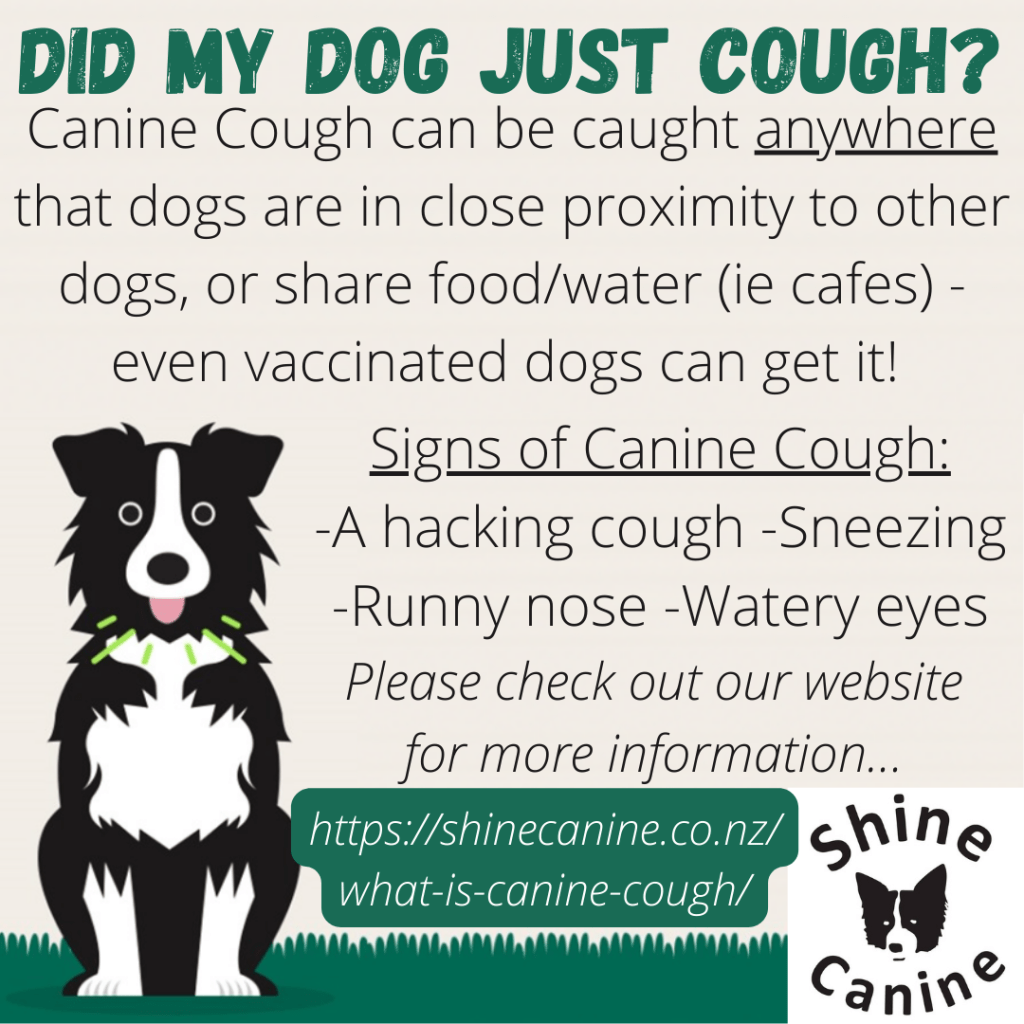
If your dog spends time around other dogs — whether at daycare, training, boarding, the vet, or even just stopping for a drink at a café water bowl — there is always a small chance they may come into contact with a respiratory bug.
Yes, even shared water bowls outside shops or cafés can spread germs.
One of the most common respiratory illnesses in dogs is canine cough, often still called “kennel cough.”
Let’s talk about what it actually is, why it happens, and what to do if your dog gets it.
What Is Canine Cough?
Canine cough (the technical term is infectious tracheobronchitis) is a contagious upper respiratory infection in dogs.
The classic symptom?
A deep, dry, hacking cough that often sounds like:
“Cough, cough, cough… hack!”
Some owners say it sounds like their dog has something stuck in their throat. Occasionally there may be a little foamy mucus at the end of a coughing fit.
It can be caused by several different viruses and bacteria — not just one single germ.
“Canine cough” is really an umbrella term covering multiple possible respiratory infections.
Why Is It Called “Kennel” Cough?
Years ago, boarding kennels were one of the only places dogs gathered together, so that’s where outbreaks were commonly noticed.
These days, dogs are far more social.
They go to:
- Daycare
- Training classes
- Agility
- Dog parks
- Groomers
- Pet stores
- Playdates
- Cafés and shared water stations
Anywhere dogs mix, germs can mix too.
It’s very similar to children starting school — exposure to other kids means exposure to new bugs.
But My Dog Is Vaccinated…
Yes — and that’s great!
The Bordetella vaccine helps protect against the most common strains of one of the main bacteria involved.
However:
- There are multiple strains
- There are viral causes we don’t routinely vaccinate for
- Vaccines can’t cover every variation
- Just like the human flu vaccine, protection isn’t 100%
So a vaccinated dog can still develop a cough.
The good news? Vaccinated dogs often experience milder symptoms and shorter duration.
How It Spreads
Canine cough spreads through:
- Coughing and sneezing (airborne droplets)
- Nose-to-nose contact
- Shared water bowls
- Close play
The tricky part?
A dog can be contagious before they start coughing — or may even show very mild symptoms while still spreading it.
This means even well-run, clean facilities (including daycare, boarding, vet clinics, groomers, pet shops, and cafés) cannot completely eliminate the risk.
What Should You Do If Your Dog Starts Coughing?
First — don’t panic.
Most healthy adult dogs with strong immune systems recover on their own within 7–10 days.
If your dog develops a cough:
- Keep them home
- Avoid daycare, boarding, training classes, dog parks and grooming
- Let them rest
At Shine Canine, dogs may return 7 days after symptoms have fully finished to reduce the risk of spreading infection.
When Should You See a Vet?
Contact your vet if your dog has:
- A fever
- Lethargy
- Loss of appetite
- Nasal discharge
- Heavy or worsening coughing
- Very young, elderly, or immune-compromised status
Some cases may need supportive care. Antibiotics are not always necessary unless there is concern about secondary infection or pneumonia.
Should Dogs Stop Socialising?
Absolutely not.
Socialisation is incredibly important for behavioural health and confidence.
With social interaction comes exposure to everyday germs — and in healthy dogs, this also helps build natural immunity over time.
The key is understanding that:
✔ Vaccination reduces severity
✔ Clean facilities reduce risk
✔ Isolation when coughing reduces spread
✔ No facility can offer a zero-risk guarantee
Our Policy at Shine Canine
Because canine cough is common anywhere dogs gather, we ask all clients to understand:
- Exposure is possible in any social setting
- Vaccination does not guarantee prevention
- Dogs showing symptoms must stay home
- Dogs can return 7 days after symptoms resolve
We take cleaning, ventilation and health monitoring seriously — but just like children in school, when dogs mix, germs can too.
And most of the time? It’s a mild, temporary inconvenience rather than a major health event.
Frequently Asked Questions About Canine Cough
How long does canine cough last?
Most mild cases last 7–10 days in healthy adult dogs.
The cough can sometimes linger slightly longer, especially at night or after excitement.
Dogs should stay home and away from other dogs until at least 7 days after all symptoms have completely stopped.
Can a vaccinated dog still get kennel cough?
Yes.
The Bordetella vaccine protects against the most common strains, but there are multiple bacteria and viruses that can cause similar symptoms.
Vaccinated dogs can still develop canine cough — however, symptoms are often milder and recovery is usually faster.
How does kennel cough spread?
Canine cough spreads through:
– Airborne droplets from coughing or sneezing
– Nose-to-nose contact
– Shared water bowls (including café and shop bowls)
– Close play
Dogs can sometimes spread the infection before they even start coughing.
Can my dog get kennel cough from daycare or boarding?
Any place where dogs gather carries some risk — including daycare, boarding facilities, dog parks, grooming salons, vet clinics, pet stores, and even shared public water bowls.
Even with vaccination requirements, cleaning protocols and good ventilation, it is impossible to guarantee zero exposure anywhere dogs mix.
When should I take my dog to the vet?
Contact your vet if your dog has:
– A fever
– Lethargy
– Loss of appetite
– Thick nasal discharge
– Difficulty breathing
– Severe or worsening cough
Puppies, elderly dogs, or dogs with compromised immune systems should be assessed sooner.
Does kennel cough always need antibiotics?
No.
Many mild cases resolve on their own with rest and supportive care.
Antibiotics may be prescribed if there is concern about secondary bacterial infection or risk of pneumonia.
Always follow your veterinarian’s advice.
Should I stop socialising my dog to avoid kennel cough?
No.
Socialisation is important for mental wellbeing and behavioural health. Exposure to everyday germs is part of normal life for social dogs — similar to children attending school.
The goal is sensible precautions, not isolation.
 shinecanine.co.nz